

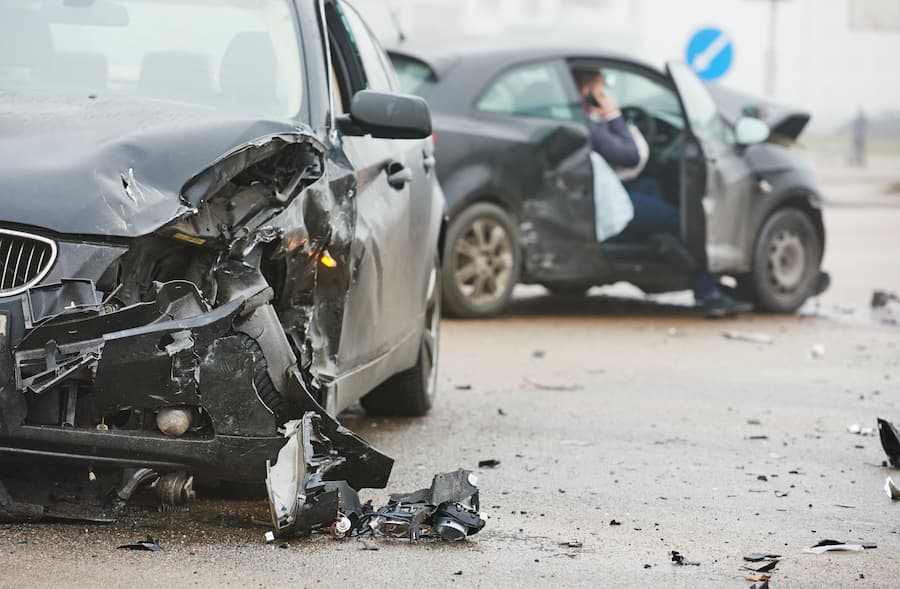
Multiple vehicle collisions are common on California’s congested highways. A tragic example occurred last year when a big rig collided with a car, starting a chain reaction that involved ten vehicles on Highway 17 near Lexington Parkway. Seven people were injured and one was killed as a result of the crash.
Occupants of the first vehicle that a careless driver strikes in a multiple vehicle collision are not always the most seriously injured. In the Highway 17 accident, the driver of the fifth car in the chain of ten was killed after he was ejected from his car.
Eight cars were involved in a 2014 San Jose accident that resulted in ten injuries. That accident occurred when a driver ran a red light and hit another car broadside, setting the stage for the multiple car pileup.
Any collision that causes injuries or death is tragic. Multiple vehicle collisions present the added challenge of sorting out responsibility for the injuries that vehicle occupants suffer. That task is relatively easy when a driver runs a red light, but other cases are more vexing for lawyers who represent injury victims.
Comparative negligence in California
In some rear-end collisions, fault can easily be determined. For example, the driver of a car who is rear-ended while stopped at a red light is clearly not at fault. The entire responsibility for the collision rests upon the driver who crashed into the stationary car.
In other rear-end collisions, the allocation of fault is more complicated. For example, suppose driver A is complying with the speed limit of 50 mph but makes a rapid or unsafe lane change on a two-lane road. Suppose also that driver B, traveling at 70 mph, fails to notice driver A’s lane change and rear-ends driver A, causing driver A to be injured. While there is little question that driver B was negligent, a good argument can be made that driver A was also negligent and that driver A’s negligence contributed to his own injuries.
California’s comparative negligence law allocates compensation for injuries in proportion to fault. In the example discussed above, a jury might find that driver B was 70 percent at fault and that driver A was 30 percent at fault. Driver A would be entitled to recover 70 percent of the total amount that the jury awards as compensation for driver A’s injuries.
Comparative negligence in multiple vehicle crashes
When bumper-to-bumper traffic is not moving at all and a speeding vehicle crashes into the last car in the unmoving chain, momentum may force the last car to collide with the car ahead of it, which causes that car to collide with the next car and so on down the chain. Several accident victims may be injured, none of whom are at fault.
On the other hand, suppose that traffic was halted because the first car in the chain stopped in the road for no reason. That driver’s negligence may have played a contributing role in the ensuing injuries. Injury victims who occupied cars in the middle may need to pursue the driver of the first car and the driver of the car that crashed into the chain to obtain full compensation.
The situation is even more complex if several cars are involved in a chain reaction collision and all of them were moving. Again, the driver of the vehicle that collides with the car at the end of the chain probably has the greatest fault, but if the driver of the car at the end had followed the next car at a greater distance, perhaps that driver’s car would not have been pushed into the car that he or she was following. When tailgating contributes to a chain reaction accident, every driver who tailgated potentially shares some liability for causing injuries of occupants in vehicles that are ahead of the tailgating driver.
Chain reaction accidents in “stop and go” traffic also present complicated issues of comparative negligence. Drivers are generally not held responsible for following another vehicle too closely when the vehicles in traffic are stopped, but if the chain reaction collision occurs while the cars are in motion, comparative negligence comes into play. If some cars are in motion but others are not, sorting out responsibility becomes a difficult undertaking.
Similar complications arise when one of the cars in a multiple car pileup is pushed into a lane of oncoming traffic. Suppose an oncoming driver could have avoided crashing into that vehicle despite its sudden incursion into the traffic lane but was texting on a cellphone and failed to react promptly. The driver who caused the first collision and the driver in the oncoming lane might both share responsibility, as well as any drivers who were tailgating.
Experience counts
Investigating the facts, making reasonable judgments about responsibility, and negotiating with multiple insurance carriers is a daunting task for even the most seasoned personal injury lawyer. If you are injured in a multiple car collision, having an experienced legal advocate on your side is essential if you want to maximize the compensation you recover.